Unauthorized reproduction or distribution is illegal and subject to criminal penalties.
Pharm Edaily enforces a zero-tolerance policy and will take strict action.
[Kim Jiwan, Edaily Reporter] Korean Biopharma Sector Gains Momentum on a String of Positive Catalysts On November 18, Korea’s pharmaceutical and biotech sector showed rare vitality as several companies reported major positive developments. Samick Pharm secured clear momentum for prescription market expansion after its diabetes combination drug “PioCita” passed the formulary review at Seoul National University Bundang Hospital. T&R Biofab drew attention as a successful M&A case after revenue from its acquisition of Bliss Pack began to materialize in earnest. Appclon, meanwhile, reduced concerns over its financial risk profile by completing a large-scale capital raise structured in favor of the issuer.
Samick Pharm’s PioCita Clears SNUBH Review Samick Pharm’s diabetes combination therapy “PioCita” passed the formulary review at Seoul National University Bundang Hospital, triggering a sharp improvement in investor sentiment. Shares of Samick Pharm surged to the daily upper limit, closing at 20,050 won, up 4,600 won (29.77 percent) from the previous session.
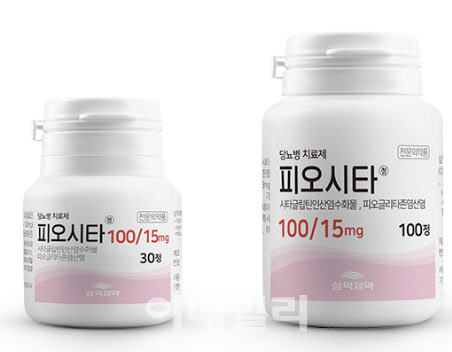 | | PioCita, a combination therapy for diabetes (Provided by Samick Pharm) |
|
PioCita combines the DPP-4 inhibitor sitagliptin and the TZD-class drug pioglitazone into a single tablet, aiming to deliver both glucose-lowering effects and improved insulin sensitivity.
Passing formulary review at Seoul National University Bundang Hospital, one of Korea’s top-tier tertiary hospitals with rigorous prescription standards, is considered a strong signal that PioCita’s clinical efficacy and safety have been validated. This significantly raises the odds of adoption among other university hospitals and regional hub medical centers.
Industry experts note that the decision could elevate Samick Pharm’s diabetes treatment portfolio to the next level, particularly if other hospitals follow with similar assessments. The familiarity of the pioglitazone?sitagliptin combination in routine clinical practice is also expected to facilitate swift uptake.
From a market standpoint, listing at a top-tier hospital acts as a “credibility certification,” potentially influencing insurance pricing, regional prescription volume, and future inclusion in clinical guidelines.
A sector official said that entry into a tertiary hospital carries meaningful weight for prescribing physicians and is likely to contribute to medium- to long-term market share expansion. Samick Pharm plans to accelerate follow-up procedures to convert the hospital listing into early sales.
A company spokesperson stated that the review approval would help strengthen product credibility in the market and that Samick Pharm would move quickly to establish hospital-level prescribing pathways.
T&R Biofab’s M&A Sparks Rapid Growth T&R Biofab’s share price jumped as the company demonstrated clear results from its acquisition of cosmetics manufacturing company Bliss Pack. The acquisition, completed late last year, is now translating into meaningful revenue growth, significantly boosting market expectations.
Shares of T&R Biofab closed at 1,500 won, up 250 won (20.00 percent) from the previous day.
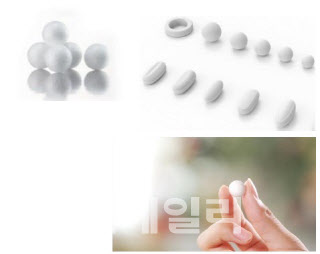 | | Freeze-dried beauty ball product (Photo=T&R Biofab) |
|
Following the acquisition, the company’s revenue structure changed dramatically. Quarterly revenue, which previously hovered in the 1 billion won range, soared to 6 billion won in the first quarter and 6.5 billion won in the second quarter. With the company’s three-year average annual revenue at roughly 5 billion won, it exceeded a year’s worth of sales in just one quarter. Bliss Pack accounted for 62.8 percent of T&R Biofab’s 12.5 billion won in revenue in the first half of the year.
Bliss Pack is Korea’s leading OEM/ODM producer of freeze-dried beauty products, equipped with monthly capacity for 300,000 balls and six fully automated blister-packaging lines. The company had fallen into court receivership after severe export declines during COVID-19. T&R Biofab acquired the business in April, and Bliss Pack quickly improved profitability by renegotiating supply prices with clients.
As a result, Bliss Pack posted 9.1 billion won in first-half revenue, up roughly 90 percent year-on-year. Its freeze-dried functional cosmetics supplied to Daiso under an ODM deal with TonyMoly sold more than one million sets in the first half, becoming a hit product. Additional products are reportedly under discussion.
T&R Biofab views the acquisition as a “win-win” for both sides. CEO Yoon Won-soo said the company is integrating its regenerative medicine technologies into cosmetics applications, while Bliss Pack continues its core manufacturing business, creating synergies at the boundary of the two domains. With a year now passed since the acquisition, the company expects even greater results going forward.
The company is currently working on applying P3DP-based biofabrication materials and ingredients to Bliss Pack’s functional beauty lines. Industry observers expect the launch of premium regenerative cosmetics, an expanded ODM portfolio, and new domestic and global clients to increase corporate value.
Market analysts note that the transaction may serve as a rare successful example of a biotech firm acquiring a non-biotech business. Bliss Pack alone has already lifted T&R Biofab’s business scale by two to three times, and further synergy could enhance brand value, widen distribution channels, and improve overall margins.
A securities industry official said that with top-line growth already proven, a turnaround in operating profit and expansion in high-margin product lines could drive a major scale-up transition, adding that the company is now a key case to watch in non-biotech M&A success.
Appclon’s Capital Raise Lifts Delisting Risk Appclon secured 36 billion won in new capital earlier this month through instruments structured largely in favor of the issuer, drawing significant market attention. The financing helps the company resolve capital impairment and delisting-risk issues that technology-special listing firms often face after prolonged revenue weakness. The structure of the CBs and CPSs means investors can only generate meaningful returns if the stock price rises above the conversion price.
Appclon raised 25.2 billion won through convertible bonds (CB) and 10.8 billion won through convertible preferred shares (CPS) from six institutional investors, including DSC Investment. The company also disclosed that the CB issuance will be recognized as equity rather than debt, easing concerns about financial soundness.
Shares of Appclon closed at 31,300 won, up 5.21 percent from the prior session.
The conversion price for both the CBs and CPSs was set at 18,223 won. While slightly below the recent 20,000-won range, the price is considered high relative to last month’s 10,000~12,000-won trading levels, reflecting investors’ expectations for future price appreciation.
The CB terms heavily favor the issuer: a zero-percent coupon, a 3-percent yield to maturity, a 30-year maturity extendable indefinitely, and a call option exercisable only by Appclon. Analysts note that investors cannot rely on bond returns and must convert to common shares and sell above the conversion price to realize profit.
The CPSs offer only a 1-percent dividend preference and can be paid only from retained earnings. Even with cumulative dividends, actual cash flow is minimal. The refixing interval is seven months?longer than the typical three to six months?and the downward adjustment floor is set at 70 percent of the issue price, compared with a more common 60 percent, limiting investor downside protection.
Bond conversion is possible starting November 7 next year. Interest payments begin only after year four at 4 percent, increasing by one percentage point annually, but the company may defer payment indefinitely.
A biotech industry official noted that despite being under watchlist designation, Appclon secured capital under highly issuer-friendly terms, suggesting that investors are betting on future stock appreciation.
Market observers point to key upcoming catalysts, including the completion of the phase 2 clinical trial of the CAR-T therapy Nespacel, a potential NDA, milestone inflows from the HER2-targeted AC101 licensed to China’s Henlius, and future commercialization progress.
Appclon was placed on the watchlist earlier this year for failing to meet the 3-billion-won annual revenue requirement. Industry experts believe the capital infusion significantly mitigates near-term survival risk and that watchlist removal may be possible if pipeline milestones materialize.

![AriBio Holdings Hits Lower Limit After Scrapping Merger With AriBio [K-bio bulse]](https://image.edaily.co.kr/images/vision/files/NP/S/2026/09/PS26093000228b.jpg)

![아리바이오 합병 철회에 홀딩스 급락…HLB제약 이틀 새 63%↑[바이오맥짚기]](https://image.edaily.co.kr/images/vision/files/NP/S/2026/09/PS26093000224b.jpg)
![[바이오스터디] AI로 꿀잠 자는 방법 알려드립니다...침실에서 병원까지 데이터로 잠을 분석하는 에이슬립 (이동헌 대표)](https://i.ytimg.com/vi/MM7dtvyr9Go/mqdefault.jpg)