Unauthorized reproduction or distribution is illegal and subject to criminal penalties.
Pharm Edaily enforces a zero-tolerance policy and will take strict action.
[Song Young Doo, Edaily Repoter] South Korean pharmaceutical and biotech stocks broadly traded lower, with JW Pharmaceutical and OliX Pharmaceuticals drawing particular attention. JW Pharmaceutical surged nearly 15% as successful multinational Phase 3 results for its gout treatment epaminurad combined with improving earnings to boost investor sentiment. OliX, meanwhile, plunged 14% despite announcing positive research results showing the potential to deliver small interfering RNA(siRNA) to the brain through subcutaneous injection. Market observers said concerns over a potential share overhang may have weighed on the stock as convertible preferred shares(CPS) issued last year approach the date when they become eligible for conversion into common shares.
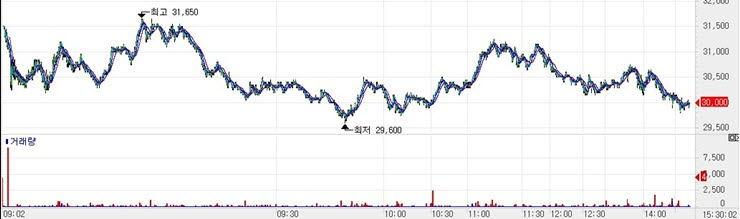 | | JW Pharmaceutical stock price trend.(Source=KG Zeroin MP Doctor) |
|
JW Pharmaceutical Surges on Phase 3 Success and Earnings Momentum According to KG Zeroin‘s MP Doctor(formerly MarketPoint), JW Pharmaceutical closed at 30,150 won on Aug. 12, up 14.86%, or 3,900 won, from the previous session.
The rally was primarily driven by the successful multinational Phase 3 trial of epaminurad(Epaminurad·URC102), an investigational gout treatment. Epaminurad is an oral uricosuric drug that selectively inhibits human uric acid transporter-1(hURAT1), reducing uric acid reabsorption in the kidneys and promoting its excretion. It is being developed for patients with hyperuricemia and gout.
The trial enrolled 612 gout patients at 52 sites across five Asian countries — South Korea, Taiwan, Thailand, Malaysia and Singapore. The study compared the efficacy and safety of epaminurad at doses of 6 mg and 9 mg with febuxostat, a standard gout treatment.
The key result came from the 6 mg dose, which JW Pharmaceutical considers its primary development dose. For the primary efficacy endpoint, 50.0% of patients receiving epaminurad 6 mg achieved serum uric acid levels below 6 mg/dL during the final three measurements of the main study period, compared with 38.3% of patients receiving febuxostat 40 mg.
The difference in response rates was 12.0 percentage points. Epaminurad met the predefined non-inferiority criterion and also demonstrated statistical superiority. Its safety profile was comparable to that of febuxostat, with similar rates of treatment-emergent adverse events(TEAEs), adverse drug reactions(ADRs) and serious adverse events(SAEs). The comparison is particularly noteworthy because febuxostat 40 mg is the dominant treatment in South Korea’s gout drug market.
According to pharmaceutical market research firm UBIST, South Korea‘s gout treatment market was worth approximately 41.1 billion won last year. Febuxostat products accounted for 34.7 billion won, or 84.4% of the market. Prescriptions for febuxostat 40 mg alone totaled approximately 26 billion won, representing more than 63% of the overall market.
However, the higher 9 mg dose of epaminurad failed to meet the statistical non-inferiority criterion against febuxostat 80 mg for the primary endpoint. The proportion of patients achieving serum uric acid levels below 6 mg/dL was 59.6% in the epaminurad 9 mg group and 63.3% in the febuxostat 80 mg group.
JW Pharmaceutical plans to proceed with the regulatory process centered on the 6 mg dose. The company is preparing a new drug application(NDA), targeting South Korean approval in 2027. It also completed two pre-NDA meetings with the Ministry of Food and Drug Safety in July.
Improving earnings also appear to have supported investor sentiment. JW Pharmaceutical said the Phase 3 success, together with its recent financial performance, was likely viewed positively by the market.
The results effectively shift the investment case for epaminurad beyond expectations surrounding preclinical or early-stage clinical development toward the more tangible prospect of regulatory approval.
OliX Drops 14% Despite Showing Brain Gene Silencing After Subcutaneous Injection OliX moved in the opposite direction. Despite announcing positive R&D results, its shares closed at 113,400 won, down 14.03%, or 18,500 won, from the previous session.
The company unveiled preclinical results from its second-generation OASIS-CNS platform targeting central nervous system(CNS) diseases. OASIS-CNS uses siRNA to silence target genes associated with CNS disorders. OliX is developing a second-generation platform that combines its siRNA technology with a blood-brain barrier(BBB) shuttle, with the aim of enabling subcutaneous(SC) or intravenous(IV) administration instead of intrathecal administration.
In simpler terms, the technology is designed to deliver RNA therapeutics into the brain through the bloodstream following a conventional subcutaneous injection, rather than requiring direct administration near the central nervous system.
When OliX administered the candidate subcutaneously and intravenously in mice, target gene silencing was observed across multiple brain regions, including deep-brain areas such as the striatum and hippocampus. Gene-silencing rates exceeded 70% to 80% in some regions.
The findings go a step beyond simply demonstrating that siRNA reached the brain. They provide an early proof of concept(PoC) that the siRNA crossed the BBB and actually suppressed target gene expression in brain tissue.
The stock, however, moved sharply in the opposite direction. OliX said it was not aware of any negative developments involving its business or R&D programs that could explain the decline. The company said it understands that some market participants have raised concerns over the approaching date when CPS issued last year become eligible for conversion into common shares.
CPS can be converted into common shares when predetermined conditions are met. Such a conversion could increase the number of common shares outstanding and dilute existing shareholders. If the converted shares are subsequently sold in the market, they could also create short-term selling pressure.
Importantly, the arrival of the conversion eligibility date does not mean that the shares will immediately be converted and sold. Whether investors exercise their conversion rights, when they do so and whether they hold or sell the resulting common shares are separate decisions.
It would therefore be premature to attribute OliX’s sharp decline solely to the CPS issue. Still, the company said concerns that the potential conversion could create a stock overhang, or a large block of shares that may potentially come onto the market, may have weighed on investor sentiment.

![Investor Sentiment Rebounds, HLB·VUNO·BNC Korea Drive Market Turning Point[K-Bio Pulse]](https://image.edaily.co.kr/images/vision/files/NP/S/2026/09/PS26092900352b.jpg)

![바람 잘 날 없는 K바이오…오름 ‘임상 중단 쇼크’에 下[바이오 맥짚기]](https://image.edaily.co.kr/images/vision/files/NP/S/2026/09/PS26092100095b.jpg)
![[바이오스터디] AI로 꿀잠 자는 방법 알려드립니다...침실에서 병원까지 데이터로 잠을 분석하는 에이슬립 (이동헌 대표)](https://i.ytimg.com/vi/MM7dtvyr9Go/mqdefault.jpg)